Akita vs Shiba Inu: how to tell them apart
Both are Japanese spitz breeds with pricked ears, a curled tail and the same whitish “urajiro” markings, but the Akita is far bigger: 67 cm at the shoulder for a male, against 39.5 cm for a Shiba male. In a photo with nothing for scale, look at the build and the colour.
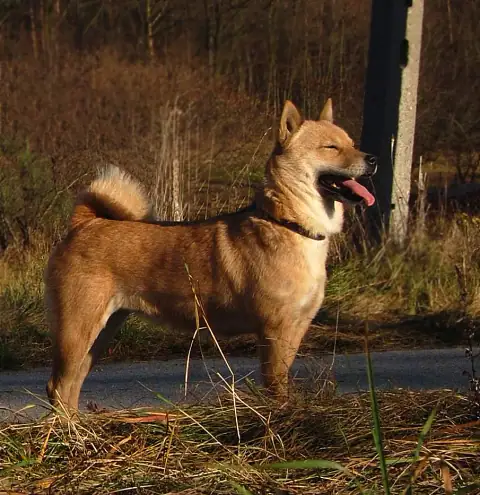
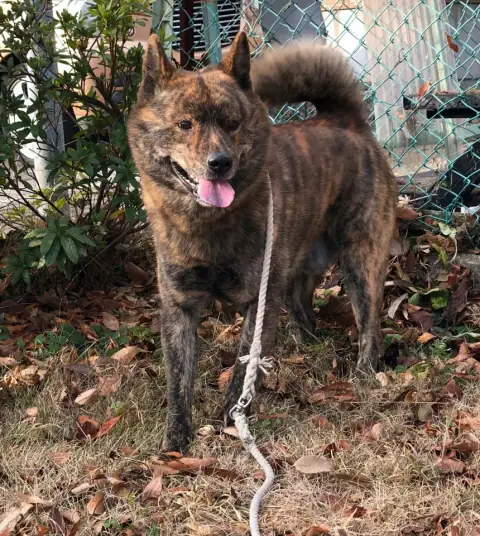
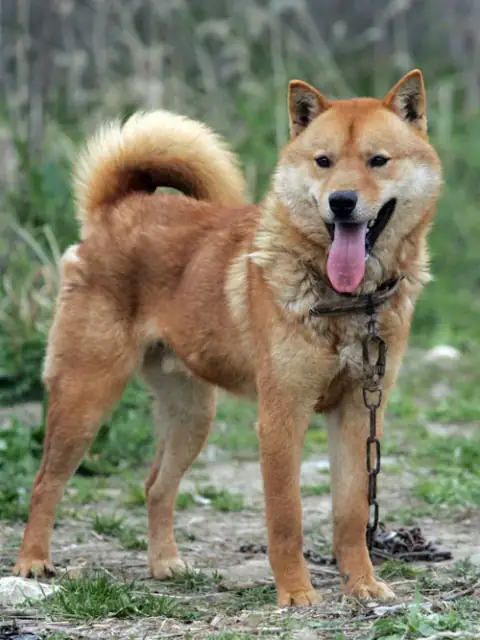
Six dogs: Akita, Shiba Inu, or another breed?
Dog 1.
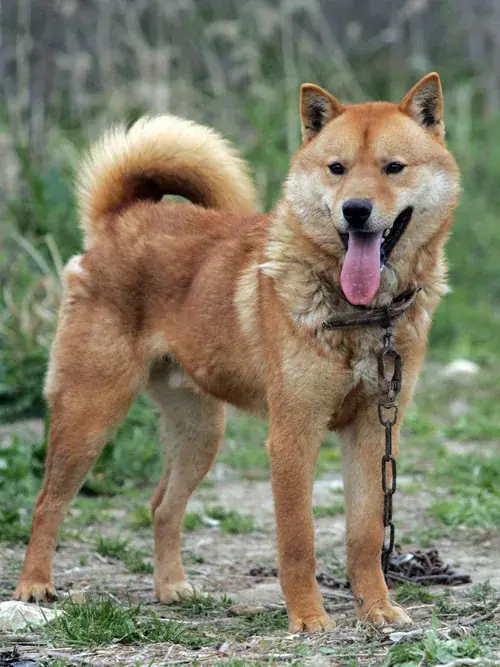
Photo: Herocosmos, CC BY-SA 4.0 Dog 2.
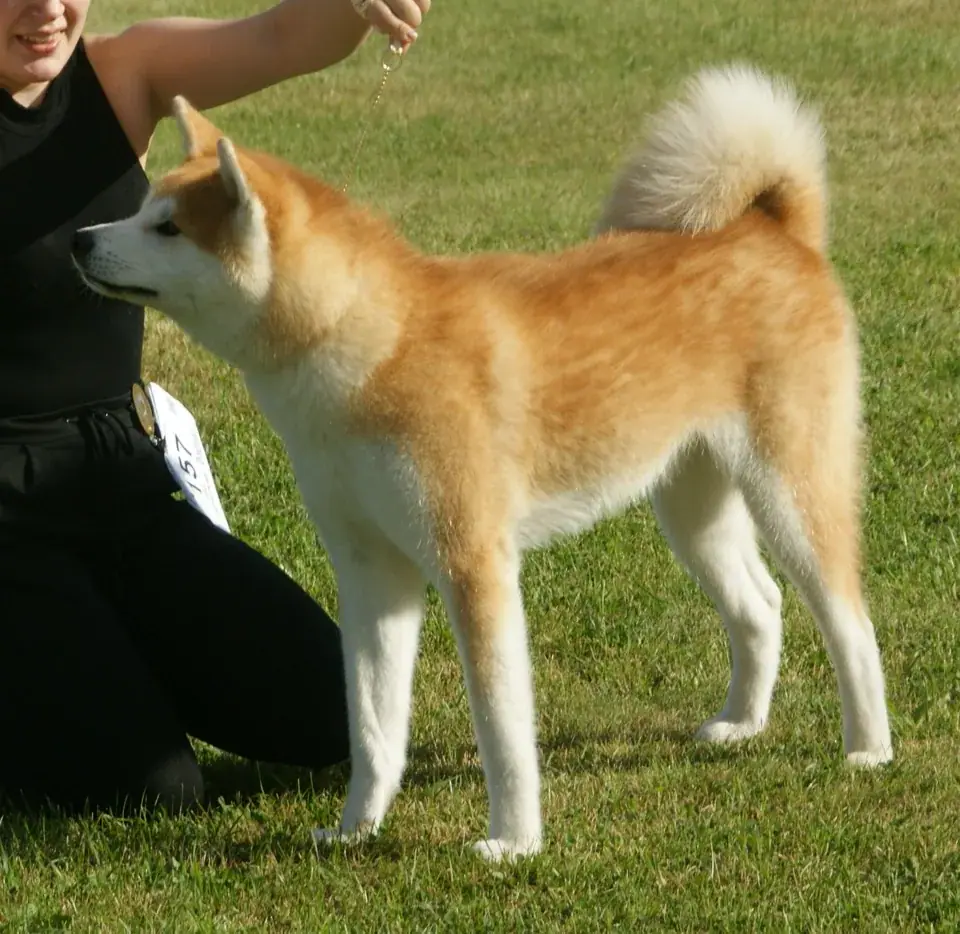
Photo: Canarian, CC BY-SA 4.0 Dog 3.
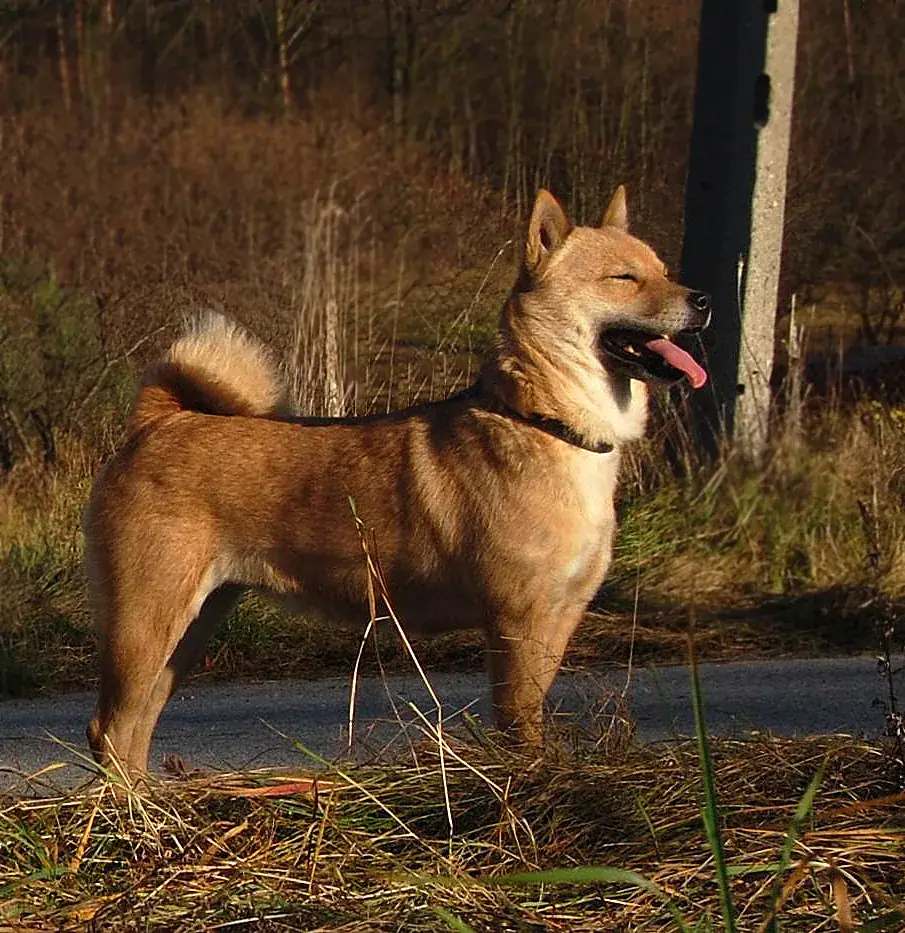
Photo: Magdalena Niemiec, CC BY-SA 3.0 Dog 4.
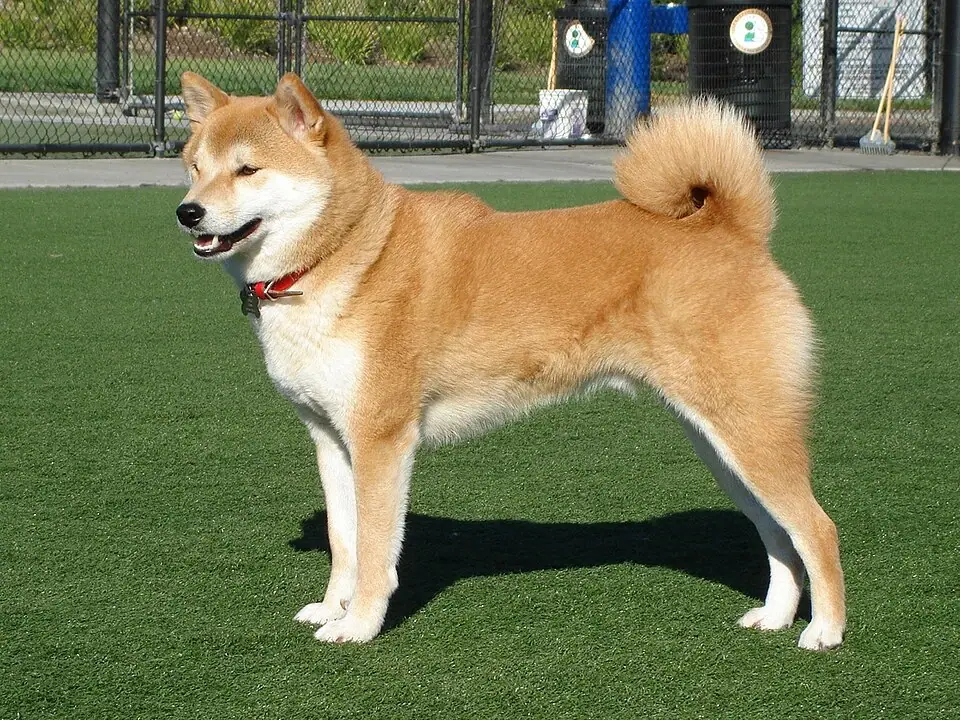
Photo: Takashiba at English Wikipedia, Public domain Dog 5.
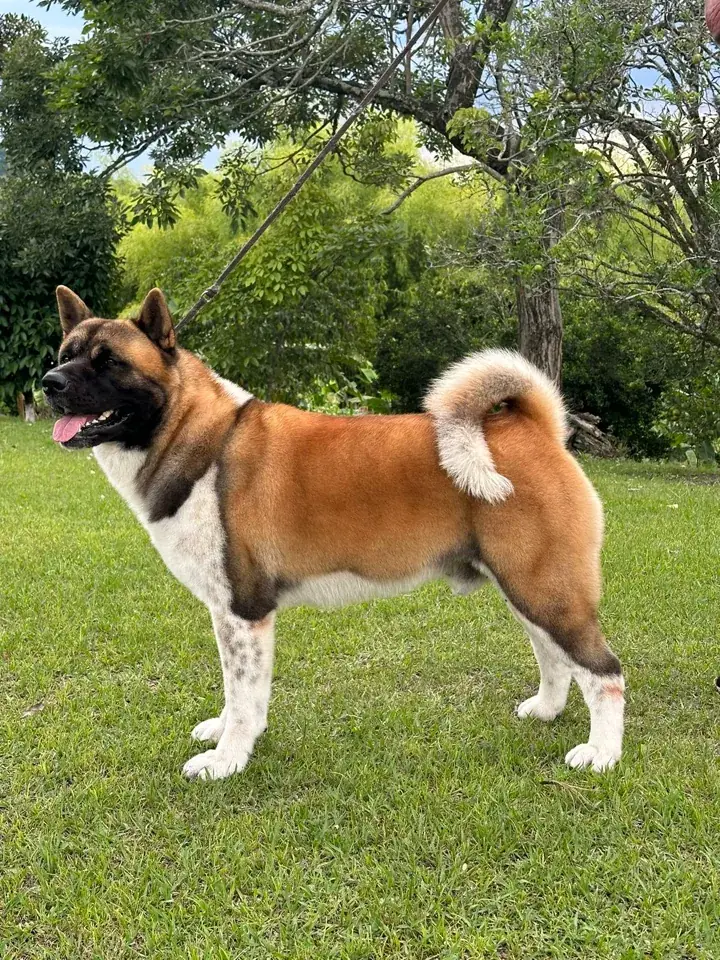
Photo: Edwin Campos, CC BY-SA 4.0 Dog 6.
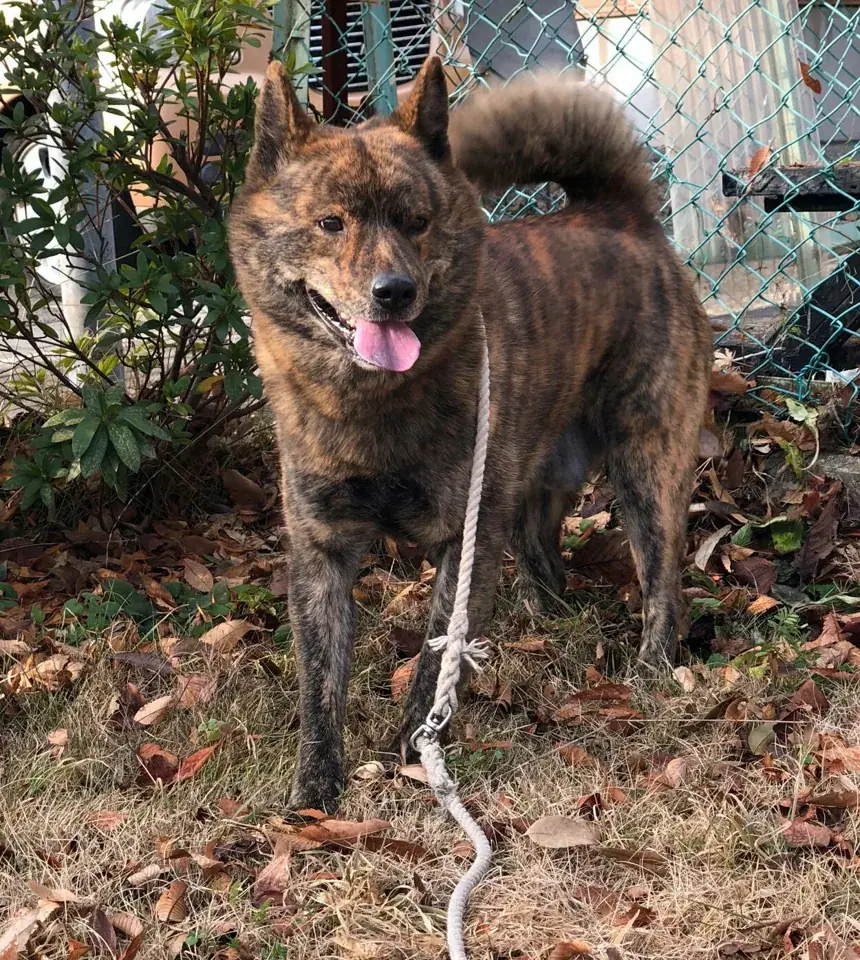
Photo: Kei87c1, CC BY-SA 4.0
The two side by side
| Akita | Shiba Inu | |
|---|---|---|
| Home | Japan, the Akita region | Japan, the mountains facing the Sea of Japan |
| Bred as | Bear-hunting dogs, then fighting dogs; today a companion dog | A hunting dog for birds and small animals; today also a companion dog |
| Height, males | 67 cm, give or take 3 cm | 39.5 cm, give or take 1.5 cm |
| Height, females | 61 cm, give or take 3 cm | 36.5 cm, give or take 1.5 cm |
| Size | Large | Small |
| Colour | Red fawn, sesame, brindle or white | Red, black and tan, sesame, black sesame or red sesame |
| Urajiro | Required on every colour except white | Required on every colour |
| Ears | Relatively small, thick, triangular, pricked and inclining forward | Relatively small, triangular, slightly inclining forward and firmly pricked |
| Tail | Thick, carried vigorously curled over the back | Thick, carried vigorously curled or curved like a sickle |
| Natural monument | 1931, nine dogs by name | 1937 |
How do you tell an Akita from a Shiba?
Size, when you have something to compare. An Akita male stands 64 to 70 cm at the shoulder, a Shiba male 38 to 41 cm, so an Akita is not far off twice as tall. The Akita’s standard calls it large, sturdily built and with much substance; the Shiba’s calls it small, well boned and quick.
Colour, when you don’t. Both breeds come in red with urajiro, so a red dog can be either. A brindle or an all-white dog points to the Akita; a black and tan dog points to the Shiba. Sesame, red hairs with black tips, is allowed in both.
The tail and ears barely help. Both carry a thick tail curled over the back; the Shiba’s may also be curved like a sickle. Both have small, triangular, pricked ears that lean forward.
Where does each come from?
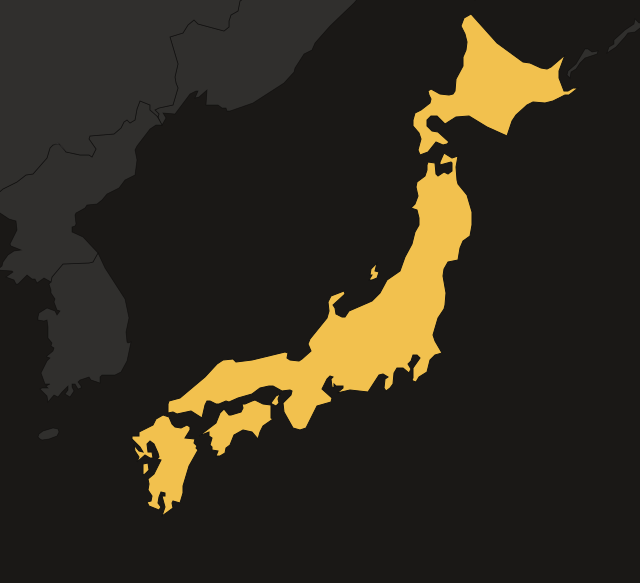
The Akita comes from the Akita region of Japan. Its standard says that Japanese dogs were originally small to medium sized. From 1603, medium-sized bear-hunting dogs called Akita Matagis were used there as fighting dogs, and from 1868 they were crossed with Tosas and Mastiffs, which made them bigger. Dog fighting was banned in 1908, and in 1931 nine Akitas were named natural monuments. After the Second World War, fanciers bred back to the Matagi type to restore the breed.
The Shiba has been a native Japanese breed “since the primitive ages”. Its standard says the word Shiba originally means “small”, a small dog, and that it hunted birds and small animals in the mountains facing the Sea of Japan. Crossing with English setters and pointers made pure Shibas scarce by the 1920s; hunters began saving them around 1928, the standard was unified in 1934, and the Shiba was named a natural monument in 1937.
The Japanese dog breeds page has all eleven Japanese breeds in the game, including the American Akita, a separate breed that shares the Akita’s history until the Second World War.
Are the Akita and the Shiba ancient breeds?
Genetic studies put both in a small group of breeds that branch off early in the dog family tree. The Akita is one of four breeds in this game that all three major studies placed in that “basal” group (Parker 2004, vonHoldt 2010 and Larson 2012). The Shiba was placed there in Parker 2004; the other two studies did not include it.
Larson and colleagues warn against reading this as age. They say these breeds “only appear so because of their relative isolation”: what they share is little recent mixing with other breeds. The oldest dog breeds page has the three studies side by side.
Was Hachiko an Akita?
Yes. Hachikō “was an Akita dog remembered for his strong dedication to his owner, Hidesaburō Ueno” (Wikipedia). Tokyo’s visitor bureau says that in the 1920s this Akita went to Shibuya Station to meet his owner on his way home from work, and kept returning to the same spot every day for nine years after his owner died. His statue there is a meeting point today (GO TOKYO).
Other spitz dogs that look alike


Facts from the Akita standard (No. 255, 13 March 2001) and the Shiba standard (No. 257, 30 October 2016).