The oldest dog breeds
Three large genetic studies placed the Akita, Basenji, Saluki and Shar-Pei in the oldest-looking branch of the dog family tree. But the 2012 study that compared them warns that these breeds look ancient in their genes because they were isolated, and that most modern breeds were created in the past 150 years.
Five questions on the oldest-looking breeds
Which of these did all three studies place in the basal group?
Which of these did all three studies place in the basal group?
Which of these did all three studies place in the basal group?
According to Larson and colleagues, what makes a breed look “ancient” in its genes?
When were most modern dog breeds created, according to the same paper?
The four breeds every study placed in the basal group
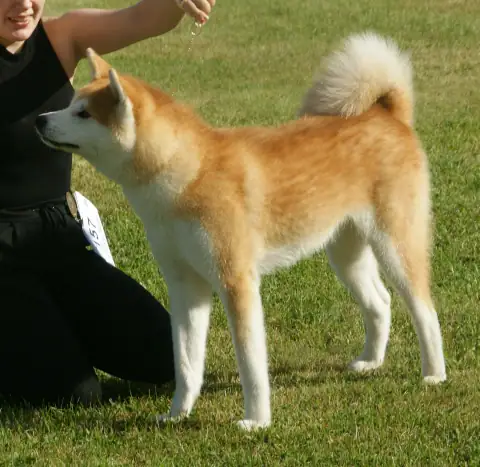
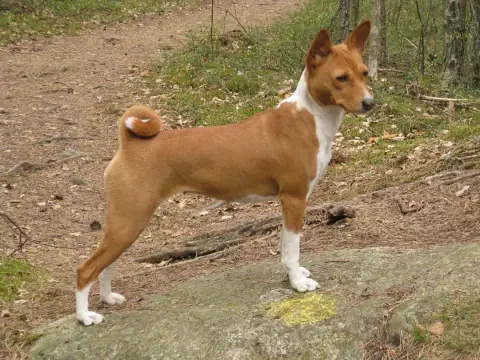
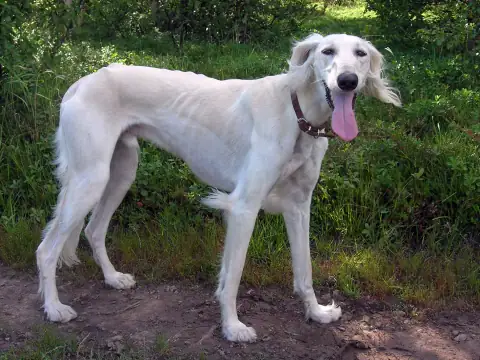
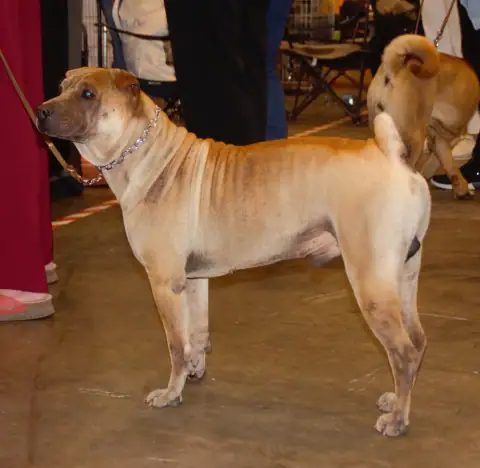
Why is there no single oldest breed?
Dogs are far older than breeds. Larson and colleagues note that breeding to strict looks with closed bloodlines only began in the 19th century, with the kennel clubs of its second half, and that claims of a modern breed’s great age rest on little or no evidence.
Genetic studies find a small set of breeds that branch off early in the family tree. Some called them “ancient”. Larson’s team called them “basal” instead, because what they share is a lack of recent mixing with other breeds, which the team links to geographic and cultural isolation. In their words, these breeds “only appear so because of their relative isolation”. None of them comes from the regions where the oldest dog remains have been found.
What did each study find?
From Table 1 of Larson and colleagues (2012), for the breeds in this game. “Not studied” means the breed was not part of that study.
| Breed | Home | Parker et al. 2004 | vonHoldt et al. 2010 | Larson et al. 2012 |
|---|---|---|---|---|
| Akita | Japan | Basal | Basal | Basal |
| Basenji | DR Congo, Congo, Uganda and South Sudan | Basal | Basal | Basal |
| Saluki | Middle East | Basal | Basal | Basal |
| Shar Pei | China | Basal | Basal | Basal |
| Afghan Hound | Afghanistan | Basal | Basal | Not studied |
| Alaskan Malamute | United States | Basal | Basal | Not studied |
| Chow Chow | China | Basal | Basal | Not studied |
| Siberian Husky | United States and Russia | Basal | Basal | Not studied |
| Samoyed | Russia | Not basal | Basal | Not studied |
| Canaan Dog | Israel | Not studied | Basal | Not studied |
| Finnish Spitz | Finland | Not studied | Not studied | Basal |
| Shiba Inu | Japan | Basal | Not studied | Not studied |
The same table also lists the dingo and the New Guinea singing dog, which are not breeds in this game.
Sources: Larson G. et al., “Rethinking dog domestication by integrating genetics, archeology, and biogeography”, PNAS, 2012 (full text); Parker H. G. et al., “Genetic structure of the purebred domestic dog”, Science, 2004; vonHoldt B. M. et al., Nature, 2010.