German dog breeds
Thirty-two breeds in Breed Guesser list Germany as their home, from the Affenpinscher to the Great Dane. Germany has more breeds in the game than any country but France and the United Kingdom, and they range from tiny house dogs to tracking hounds, pointers and guard dogs.
Five rounds: which dog is from Germany?
Which one is from Germany?
Which one is from Germany?
Which one is from Germany?
Which one is from Germany?
Which one is from Germany?
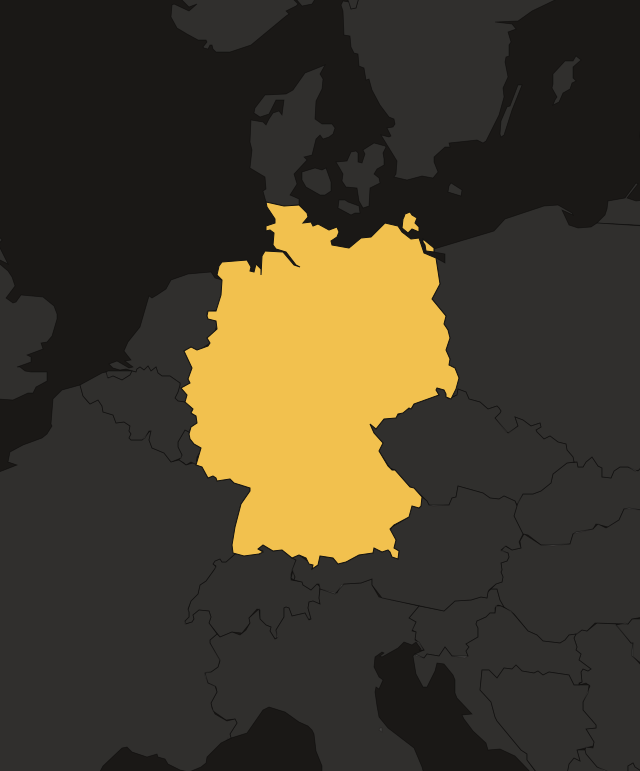
All 32 German breeds, by what they were bred for
Herding dogs (1)
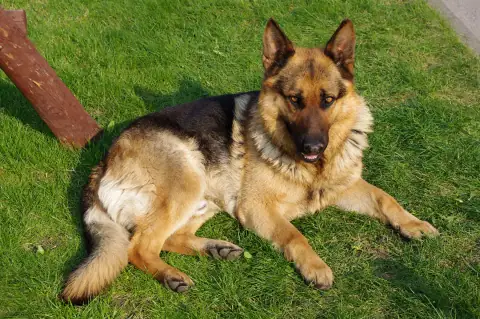
German Shepherd
Its standard was set at its club’s first meeting, in Frankfurt on 20 September 1899, to create a high-achieving working dog.
Breed standard
Working dogs (13)
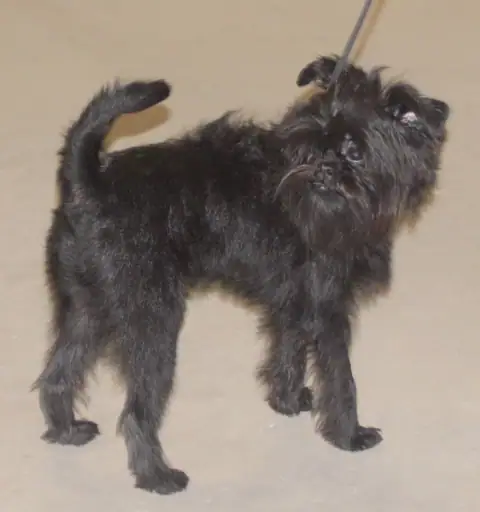
Affenpinscher
A house dog from southern Germany. Its ancestors appear in Albrecht Dürer’s woodcuts, and a ring of harsh hair gives it a monkey-like face.
Breed standard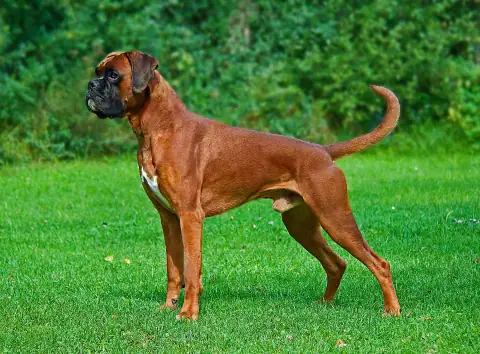
Boxer
Descended from the small Brabant Bullenbeisser, which seized game and held it for the hunter.
Breed standard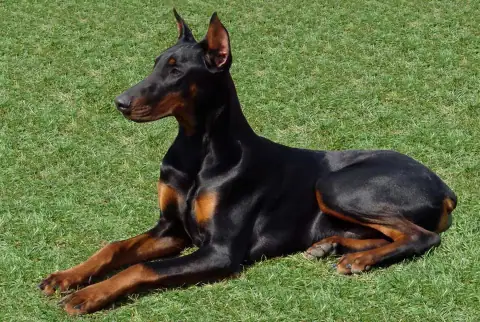
Dobermann
The only German breed named after its first breeder, Friedrich Louis Dobermann (1834 to 1894).
Breed standard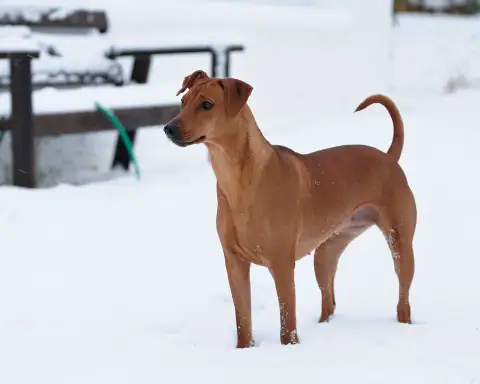
German Pinscher
Also called Deutscher Pinscher
An old breed, in the German stud book by 1880. It shares its ancestors with the Schnauzer.
Breed standard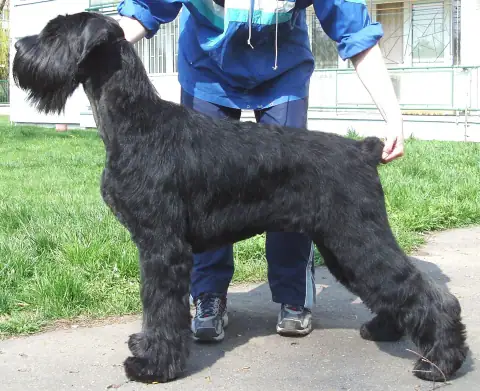
Giant Schnauzer
Also called Riesenschnauzer
Used in southern Germany to drive cattle; recognised as a working dog in 1925.
Breed standard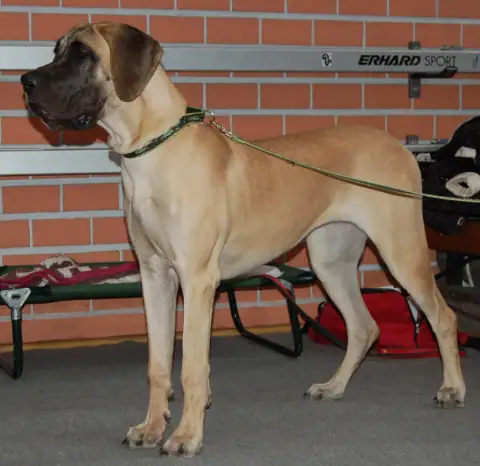
Great Dane
Also called Deutsche Dogge
In 1878 a committee in Berlin grouped the old types of big German “Dogge” as one breed; its first standard followed in 1880.
Breed standard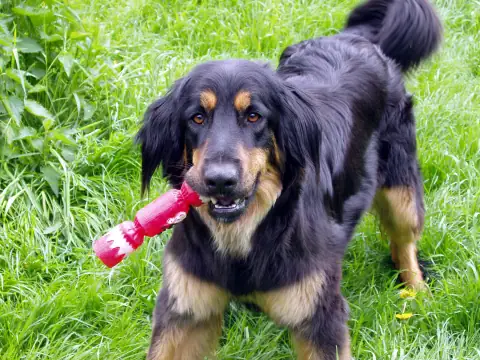
Hovawart
Its name is old German for “farm guardian”. Rebuilt from farm dogs from 1922, and recognised as a breed in 1937.
Breed standard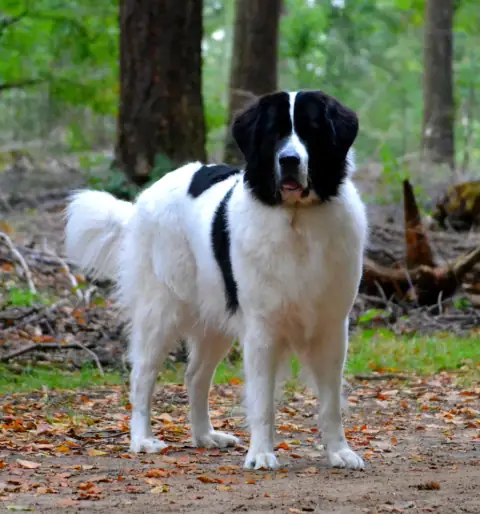
Landseer
Listed under Germany and Switzerland. White with distinct black patches; males stand 72 to 80 cm.
Breed standard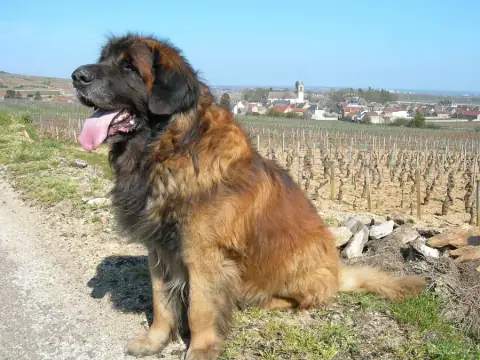
Leonberger
Bred around 1840 by Heinrich Essig of Leonberg, near Stuttgart, to look like the lion on the town’s arms. Named Leonbergers in 1846.
Breed standard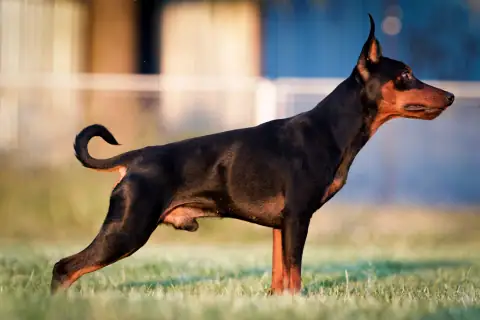
Miniature Pinscher
Also called Zwergpinscher
A small version of the German Pinscher. The stud book for 1925 already held 1,300 of them.
Breed standard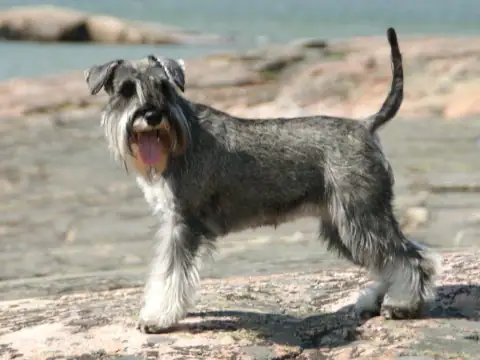
Miniature Schnauzer
Also called Zwergschnauzer
A small Schnauzer from around Frankfurt am Main, first described as a rough-haired Miniature Pinscher.
Breed standard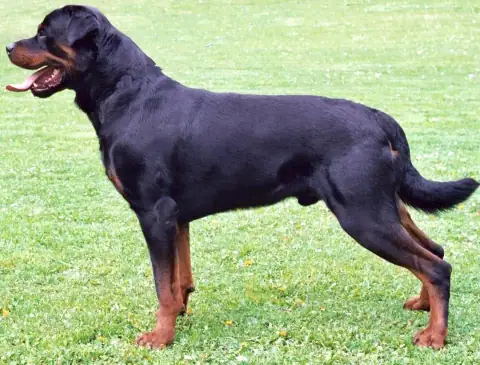
Rottweiler
Its standard traces it to Roman cattle dogs. It is named after the old free town of Rottweil, where it drove and guarded herds.
Breed standard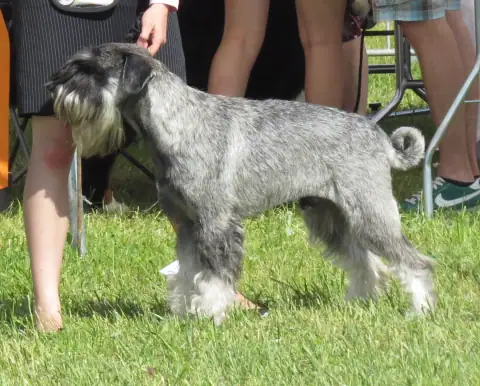
Schnauzer
Also called Mittelschnauzer
A stable dog in southern Germany, prized for killing rats. Registered in 1895 as the “rough-haired Pinscher”.
Breed standard
Terriers (1)
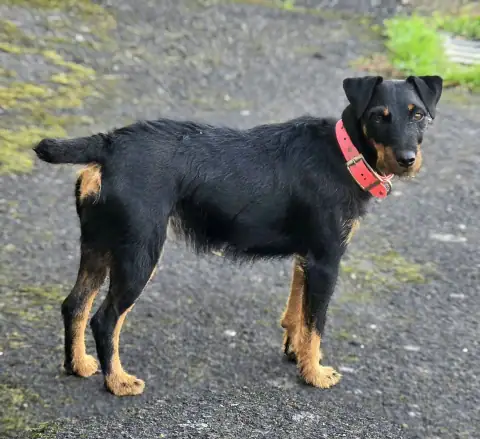
Jagdterrier
Also called Deutscher Jagdterrier
Created after the First World War by hunters who wanted a black and tan terrier purely for hunting, above all underground.
Breed standard
Dachshunds (1)
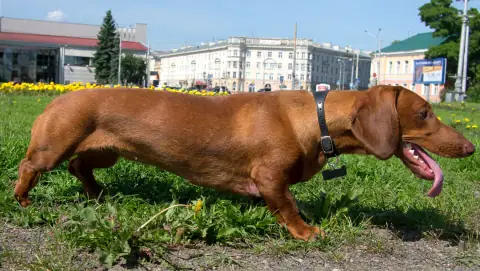
Dachshund
Also called Dackel or Teckel
Known since the Middle Ages and bred to hunt below ground. Its oldest club, the Deutsche Teckelklub, dates from 1888.
Breed standard
Spitz and primitive breeds (2)
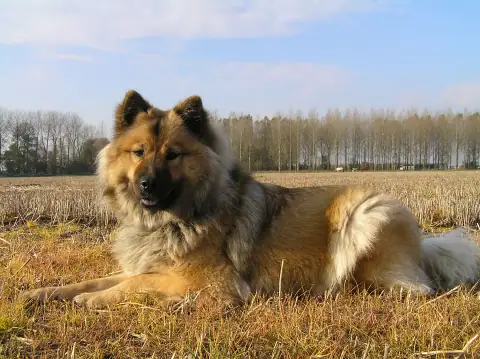
Eurasier
Bred from 1960 by Julius Wipfel, first from a Chow Chow and a Wolfspitz, then with a Samoyed.
Breed standard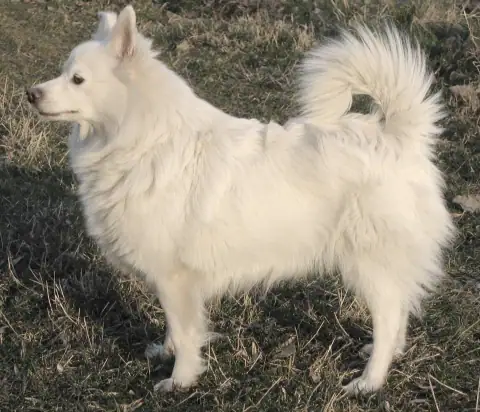
German Spitz
Also called Deutscher Spitz; the Wolfsspitz is the Keeshond
Its standard traces it to Stone Age “peat dogs” and calls it the oldest breed in Central Europe, with many other breeds developed from it.
Breed standard
Scenthounds (4)
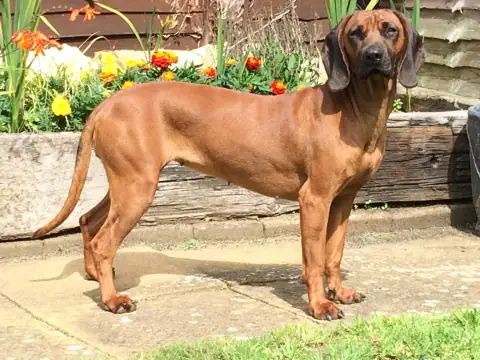
Bavarian Mountain Hound
Also called Bayerischer Gebirgsschweißhund
A lighter tracking hound for the mountains, where the Hanoverian proved too heavy. Its club was founded in Munich in 1912.
Breed standard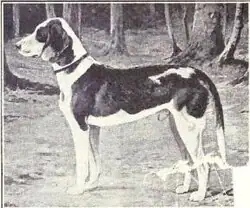
German Hound
Also called Deutsche Bracke
The last surviving Bracke of the old Westphalian kind, called the German Hound since 1900.
Breed standard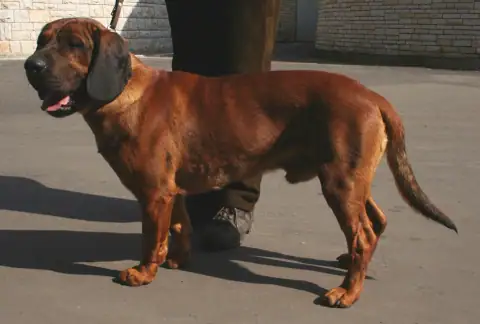
Hanover Hound
Also called Hannoverscher Schweißhund
Descended almost unchanged from the leash hounds of the early Middle Ages. It tracks wounded game.
Breed standard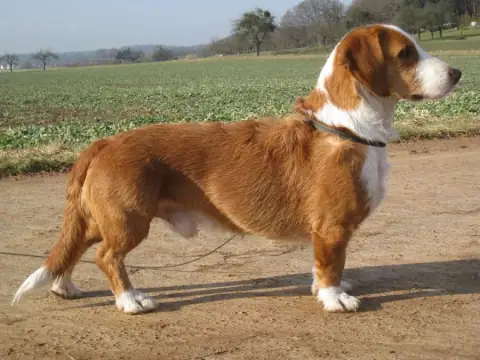
Westphalian Dachsbracke
Also called Westfälische Dachsbracke
The short-legged variety of the German Hound: compact and sturdy, 30 to 38 cm tall.
Breed standard
Pointers and setters (8)
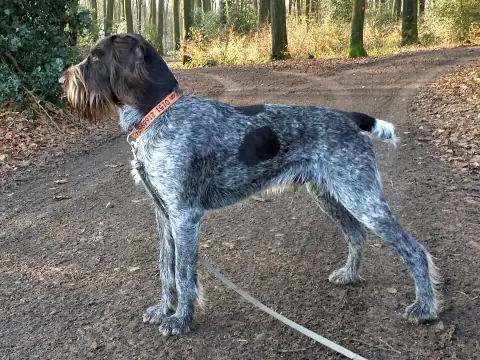
Deutsch Stichelhaar
Called by its standard the oldest German rough-coated pointing dog. Its club was founded in 1892.
Breed standard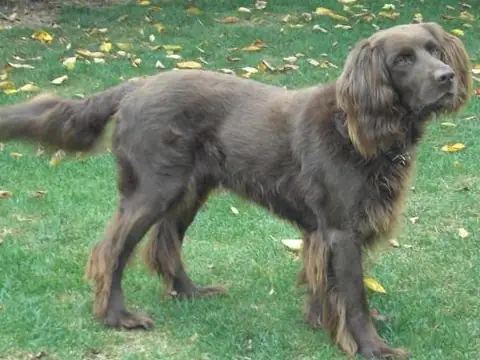
German Longhaired Pointer
Also called Deutsch Langhaar
Bred pure since 1879; Baron von Schorlemer wrote its first standard in 1897.
Breed standard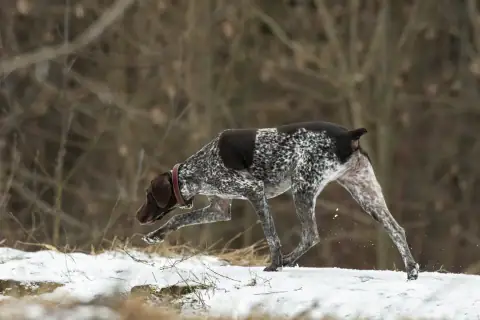
German Shorthaired Pointer
Also called Deutsch Kurzhaar
Descended from the pointers used to catch birds with nets; the double-barrelled gun, from 1750, made it a versatile gundog.
Breed standard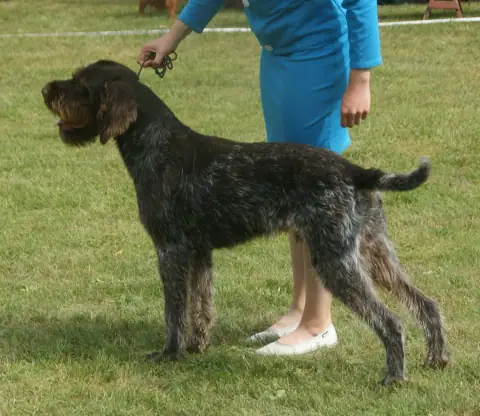
German Wirehaired Pointer
Also called Deutsch Drahthaar
A rough-coated pointing dog, bred to a plan from the early 1900s to be an efficient wirehaired German gundog.
Breed standard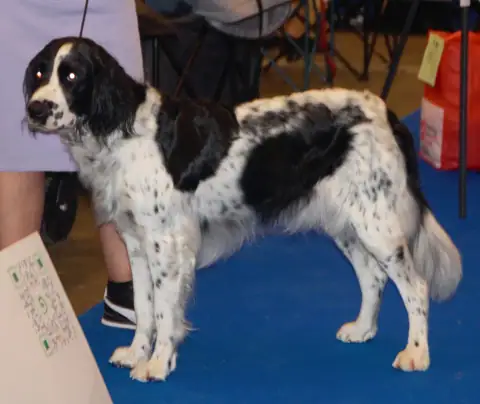
Large Munsterlander
Also called Großer Münsterländer
A black and white longhaired pointer. Its own club formed after the German Longhair club stopped breeding black dogs in 1909.
Breed standard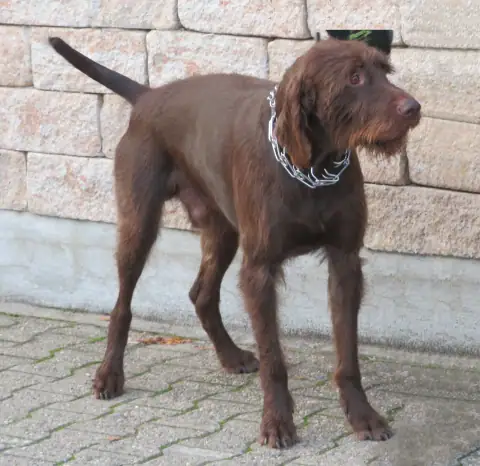
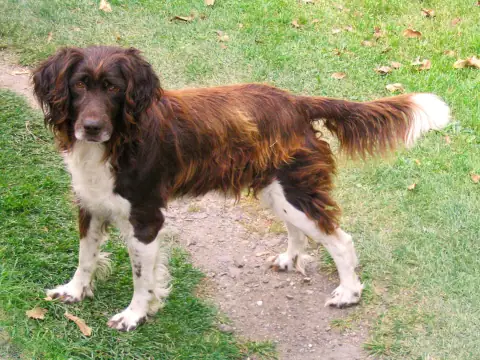
Small Münsterländer
Also called Kleiner Münsterländer
Bred in the Münsterland of northern Germany since about 1870; its breed club was founded in 1912.
Breed standard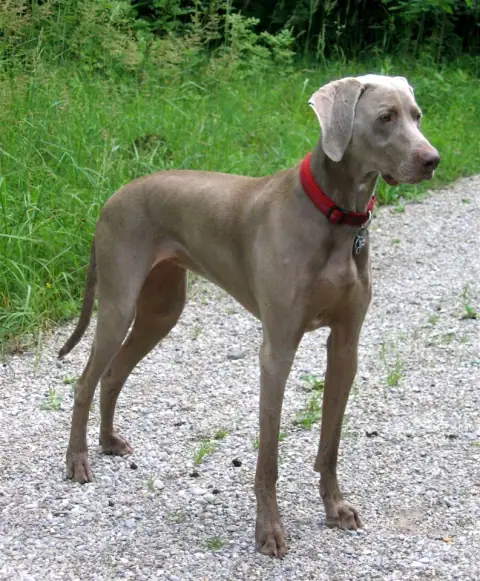
Weimaraner
Kept at the Weimar court by the early 1800s, and likely, its standard says, the oldest German pointing breed.
Breed standard
Retrievers and water dogs (1)
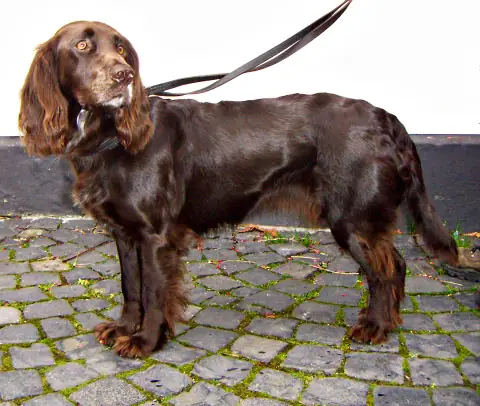
German Spaniel
Also called Deutscher Wachtelhund
A flushing dog. Hunting books show dogs like it working for centuries; its founding sire came from Upper Bavaria.
Breed standard
Companion dogs (1)
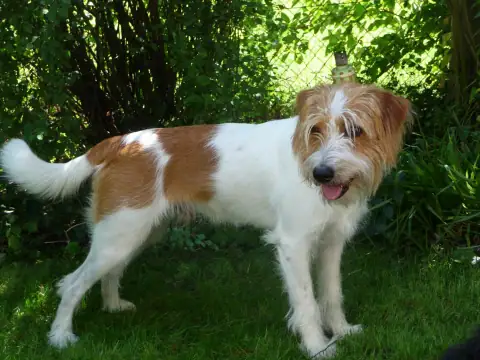
Kromfohrländer
One of the newest German breeds, recognised internationally since 1955, from a wire-haired Fox Terrier and a Grand Griffon Vendéen.
Breed standard
Which big dog breeds come from Germany?
The big guard, working and companion dogs. Heights are for males, from each breed’s standard; the Great Dane is the tallest.
| Breed | Height, males |
|---|---|
| Great Dane | At least 80 cm, at most 90 cm |
| Leonberger | 72 to 80 cm |
| Landseer | 72 to 80 cm |
| Dobermann | 68 to 72 cm |
| Hovawart | 63 to 70 cm |
| Rottweiler | 61 to 68 cm |
| Giant Schnauzer | 60 to 70 cm (both sexes) |
| German Shepherd | 60 to 65 cm |
Which German breeds do people mix up?
The three Schnauzers. They are one type in three sizes. The Giant Schnauzer stands 60 to 70 cm, the Schnauzer 45 to 50 cm and the Miniature Schnauzer 30 to 35 cm.
Pinscher, Miniature Pinscher and Dobermann. The German Pinscher stands 45 to 50 cm, and the Miniature Pinscher is its small version at 25 to 30 cm. The Dobermann is a separate, much bigger breed, 68 to 72 cm for a male.
The German pointers, by coat. The Shorthaired has a short, dense coat that is rough and hard to the touch. The Wirehaired has a harsh, flat-lying wire coat of about 2 to 4 cm. The Longhaired has close-fitting hair of 3 to 5 cm on the back and sides. The Weimaraner is the grey one.