Australian Shepherd vs Border Collie: how to tell them apart
Despite its name, the Australian Shepherd is an American breed; the Border Collie is British. Both are medium-sized herding dogs that can share colours, so look at the tail and the ears first.
Six dogs: Australian Shepherd, Border Collie, or another breed?
Dog 1.
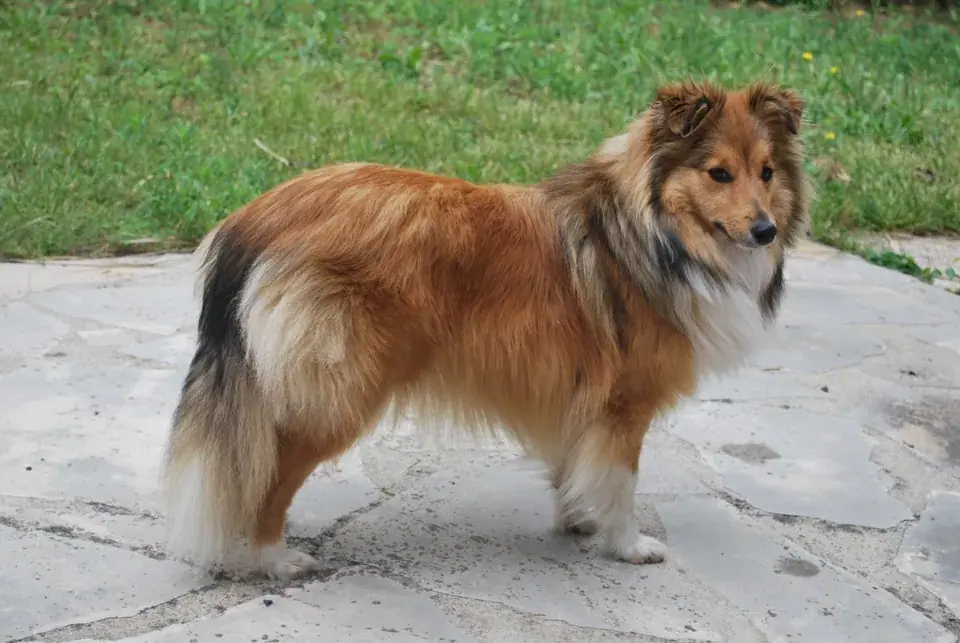
Photo: Narisoa, CC BY-SA 4.0 Dog 2.
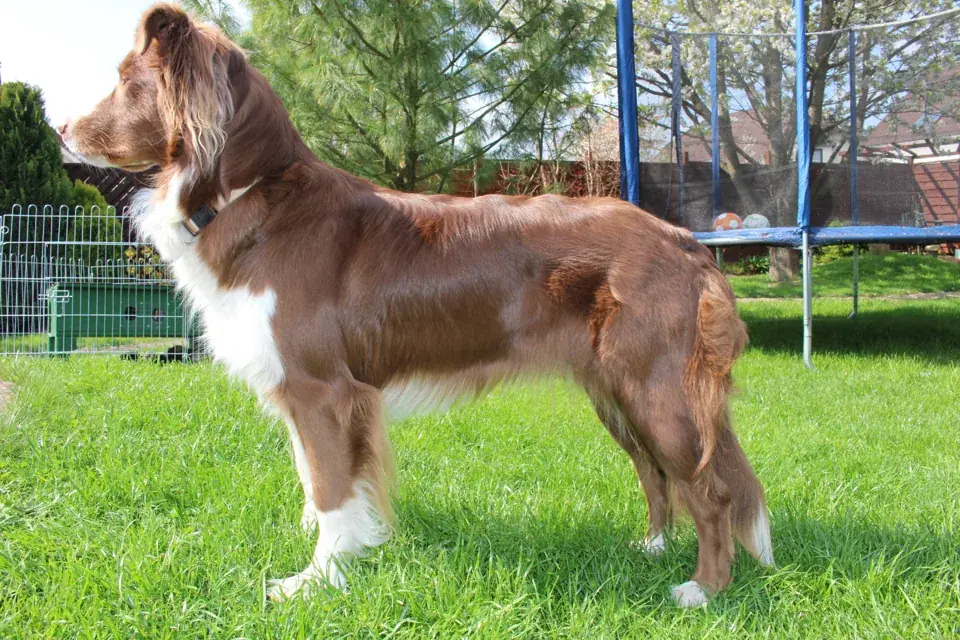
Photo: Trickdog-Fina, CC BY-SA 3.0 Dog 3.
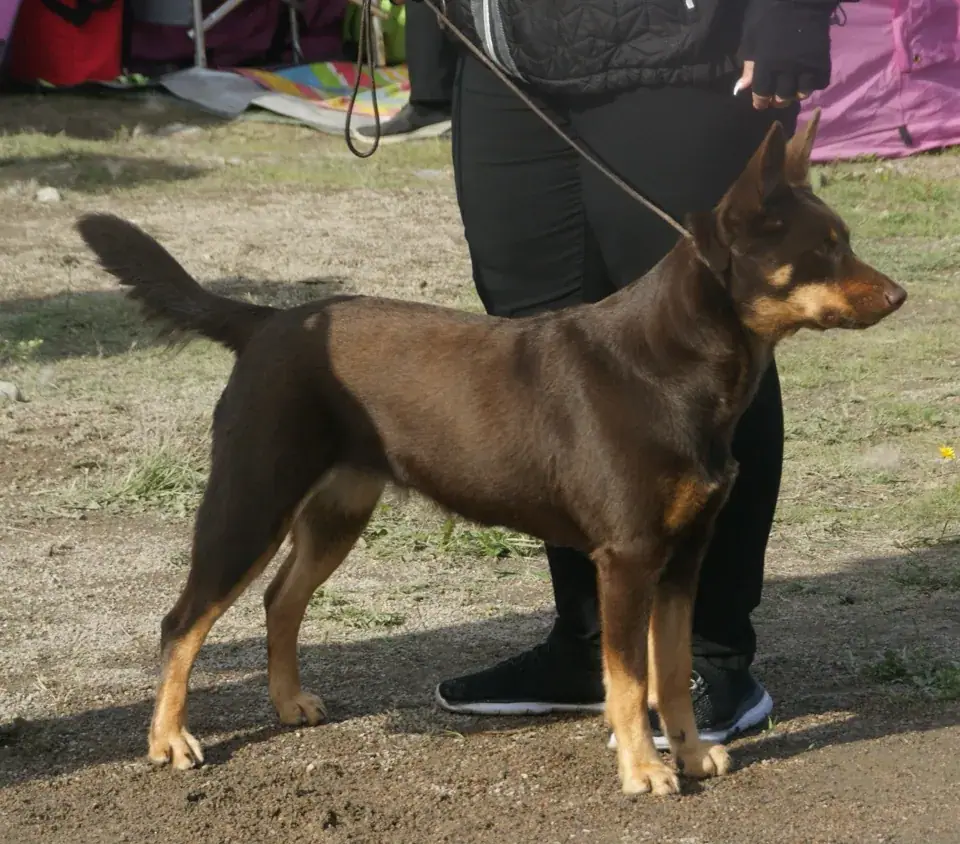
Photo: Canarian, CC BY-SA 4.0 Dog 4.
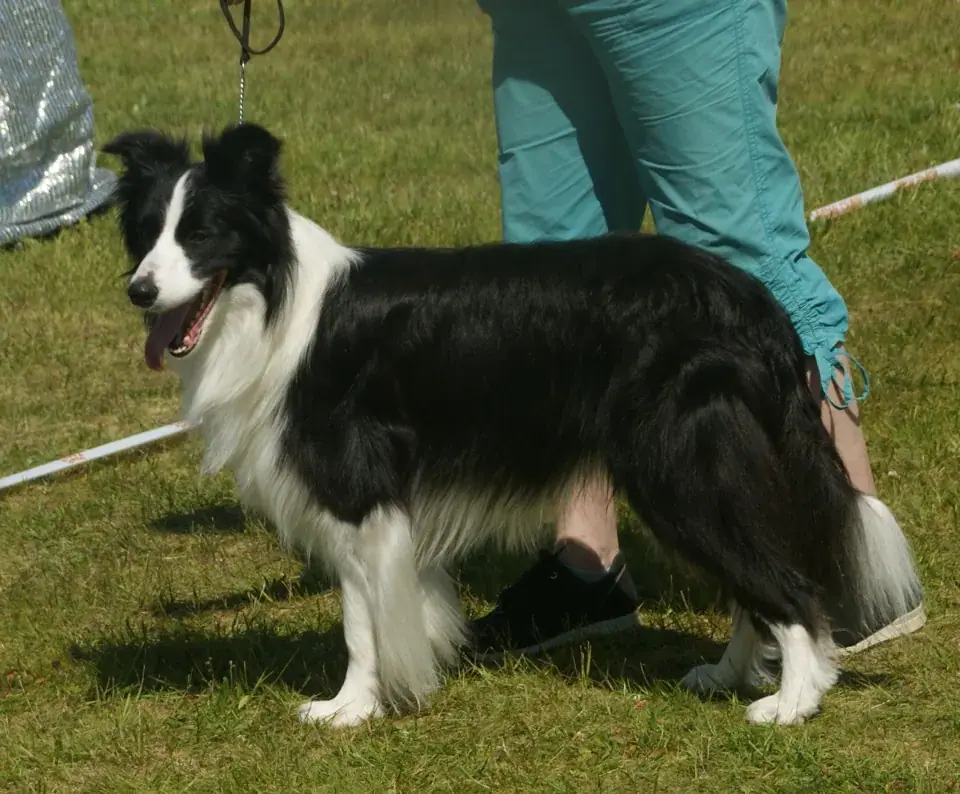
Photo: Canarian, CC BY-SA 4.0 Dog 5.
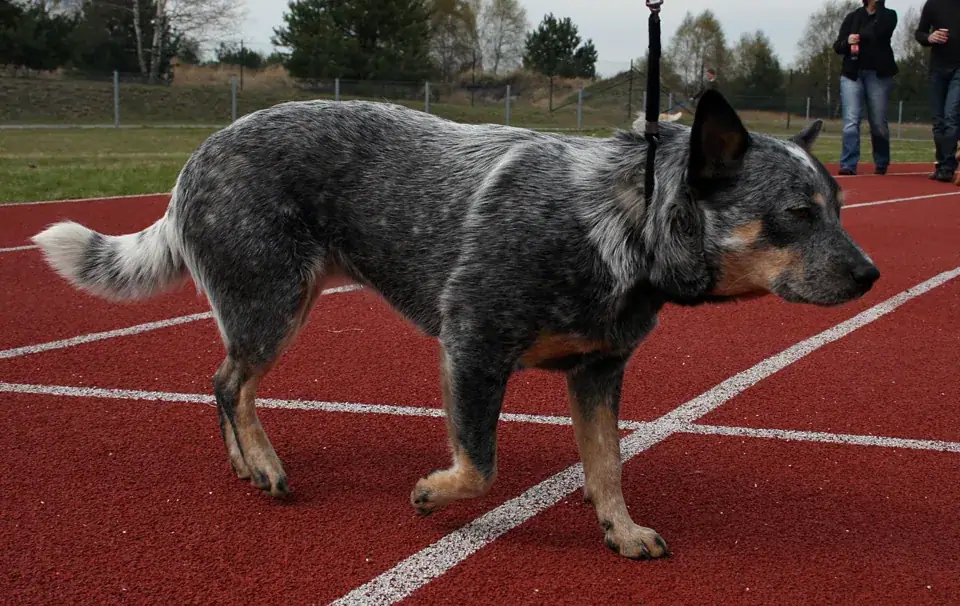
Photo: Pleple2000, CC BY-SA 3.0 Dog 6.
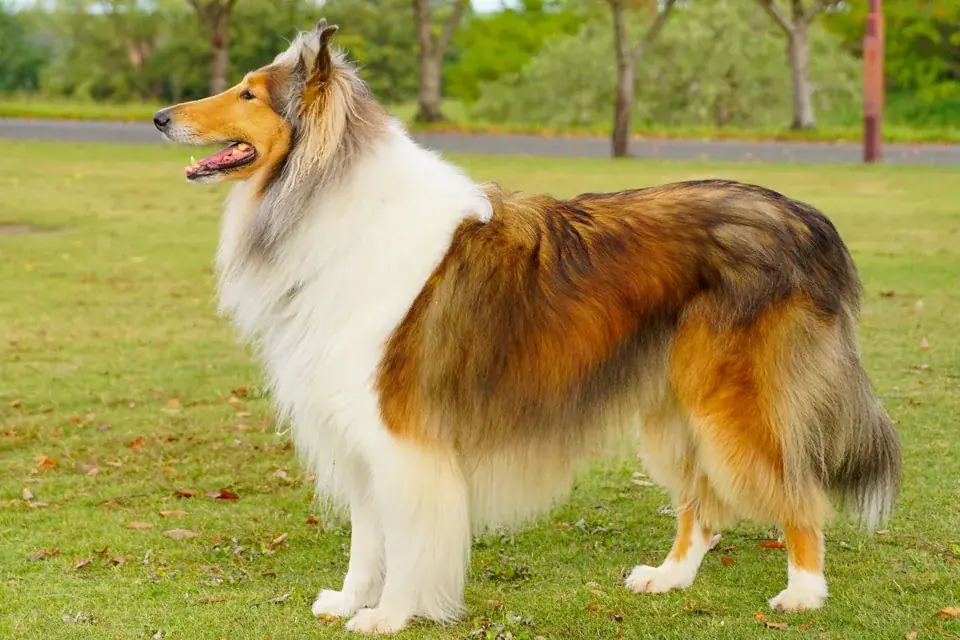
Photo: Yasu w, CC BY-SA 4.0
The two side by side


| Australian Shepherd | Border Collie | |
|---|---|---|
| Home | United States | Great Britain |
| Bred as | A farm and ranch shepherd dog | A sheepdog |
| Height, males | 51 to 58 cm (20 to 23 in) | Ideally 53 cm (21 in) |
| Height, females | 46 to 53 cm (18 to 21 in) | Slightly less than males |
| Tail | Straight, naturally long or naturally short; a short or docked tail is no more than 10 cm | Moderately long, reaching at least the hock, set low, with an upward swirl at the end; never carried over the back |
| Ears | Triangular and set high; at attention they break forward and over, or to the side | Medium sized, set well apart, carried erect or semi-erect |
| Coat | Medium length, straight to wavy, with a moderate mane and frill | Two varieties: moderately long, with mane, breeching and brush, or smooth |
| Colour | Blue merle, black, red merle or red, each with or without white and tan markings | Many colours allowed; white should never predominate |
How do you tell an Aussie from a Border Collie?
The tail first. An Australian Shepherd’s tail is straight and may be naturally short; where docking is allowed, a short tail is no more than 10 cm. A Border Collie’s tail is moderately long, reaching at least the hock, hangs low and sweeps upward at the end. A dog with a bob tail is far more likely to be an Aussie.
Then the ears. An Aussie’s ears are triangular and set high, and at attention they fold forward and over, or to the side. A Border Collie’s are set well apart and carried erect or semi-erect.
Colour only narrows it down. The Australian Shepherd standard lists four colours: blue merle, black, red merle and red, each with or without white and tan. The Border Collie standard allows many colours and asks only that white never predominate. So a black and white dog could be either, and a merle is not proof of an Aussie.
Size barely helps. Aussie males stand 51 to 58 cm; the ideal Border Collie male is 53 cm, right in the middle of that range.
Why is it called the Australian Shepherd?
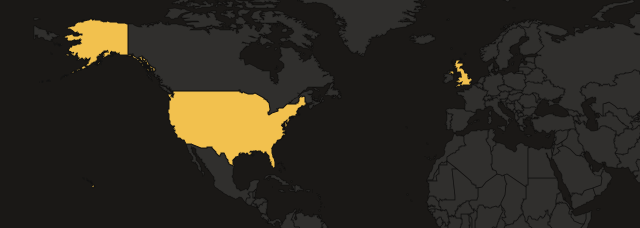
Because of the shepherds who worked with it, not because of where it was bred. Its standard says that while there are many theories about the breed’s origin, “the breed as we know it today developed exclusively in the United States”. It was given its name “because of the association with Basque Sheepherders who came to the United States from Australia in the 1800’s”.
The standard adds that its popularity rose with western horseback riding after the Second World War, through rodeos, horse shows, films and television, and that American stockmen kept developing it as a ranch dog. It does not name the breeds behind it.
The Border Collie’s standard has no history section. It names its home as Great Britain and its job as a sheepdog.
Which herding dogs really come from Australia?
The Australian Kelpie and the Australian Cattle Dog. Two British sheepdogs that people also mix up with these two are beside them.
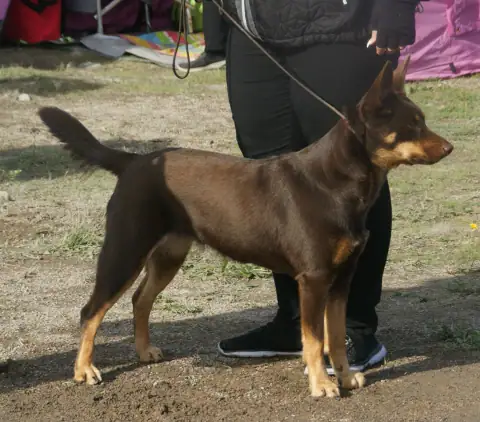 Australian KelpieAustralia
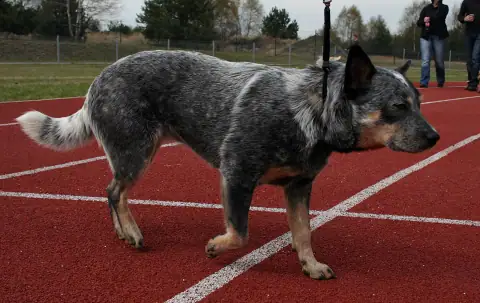 Australian Cattle DogAustralia
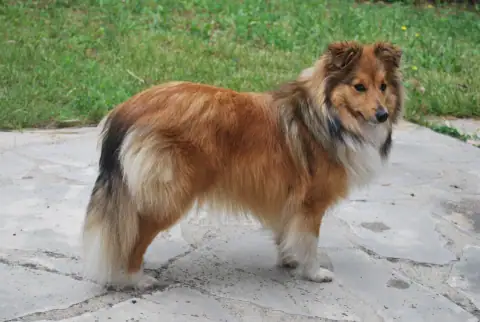 Shetland SheepdogUnited Kingdom
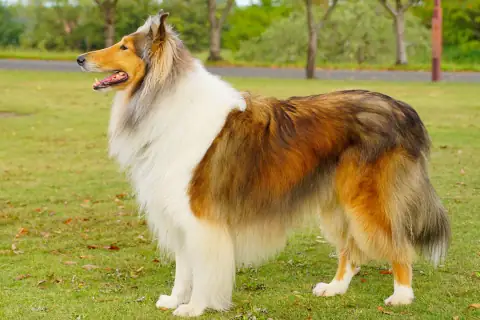 Rough CollieUnited Kingdom
More pairs people mix up: German Shepherd vs Belgian Malinois, and the dog that made the Rough Collie famous, what breed is Lassie?
Facts from the Australian Shepherd standard (No. 342, 26 March 2009) and the Border Collie standard (No. 297, 24 June 1987).